Hermes Agent setup for companies: what it includes and what it costs
Hermes Agent setup means deploying a company-owned AI agent with your knowledge, tools, and brand voice — not a generic chatbot demo. In 2026, a production setup with knowledge grounding, tool wiring, and guardrails typically takes 4–8 weeks for a pilot and costs far less than a full custom build, as long as the knowledge base is done properly.
What Hermes Agent setup actually means
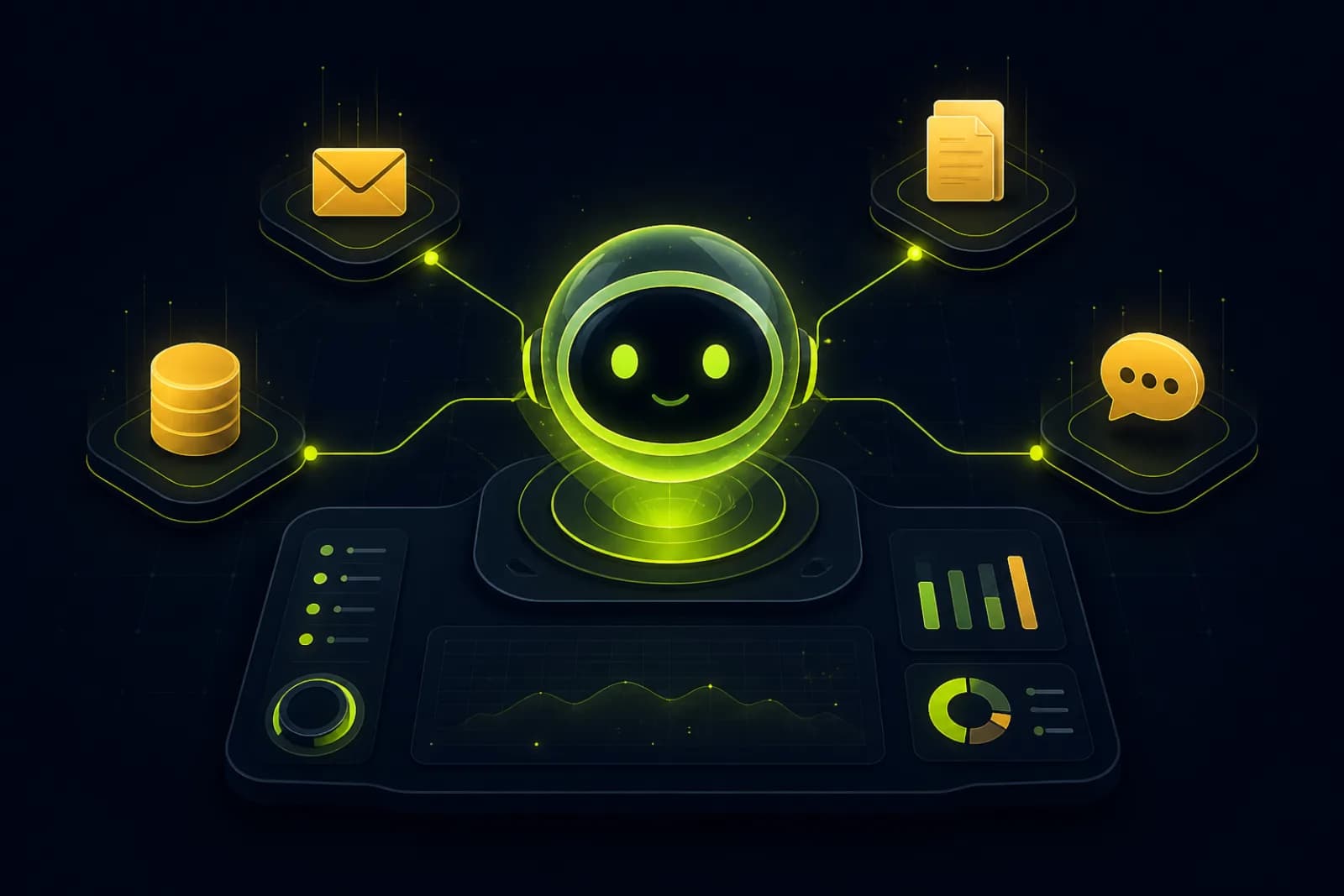
Most “AI agent” pitches stop at a chat widget on a website. A Hermes Agent setup for a company is a different thing entirely: you deploy an agent that is grounded in your product and studio knowledge, wired into email and operational tools, and constrained by a brand voice that matches how your business already talks to customers. It is closer to hiring and onboarding a reliable junior teammate than installing a plugin.
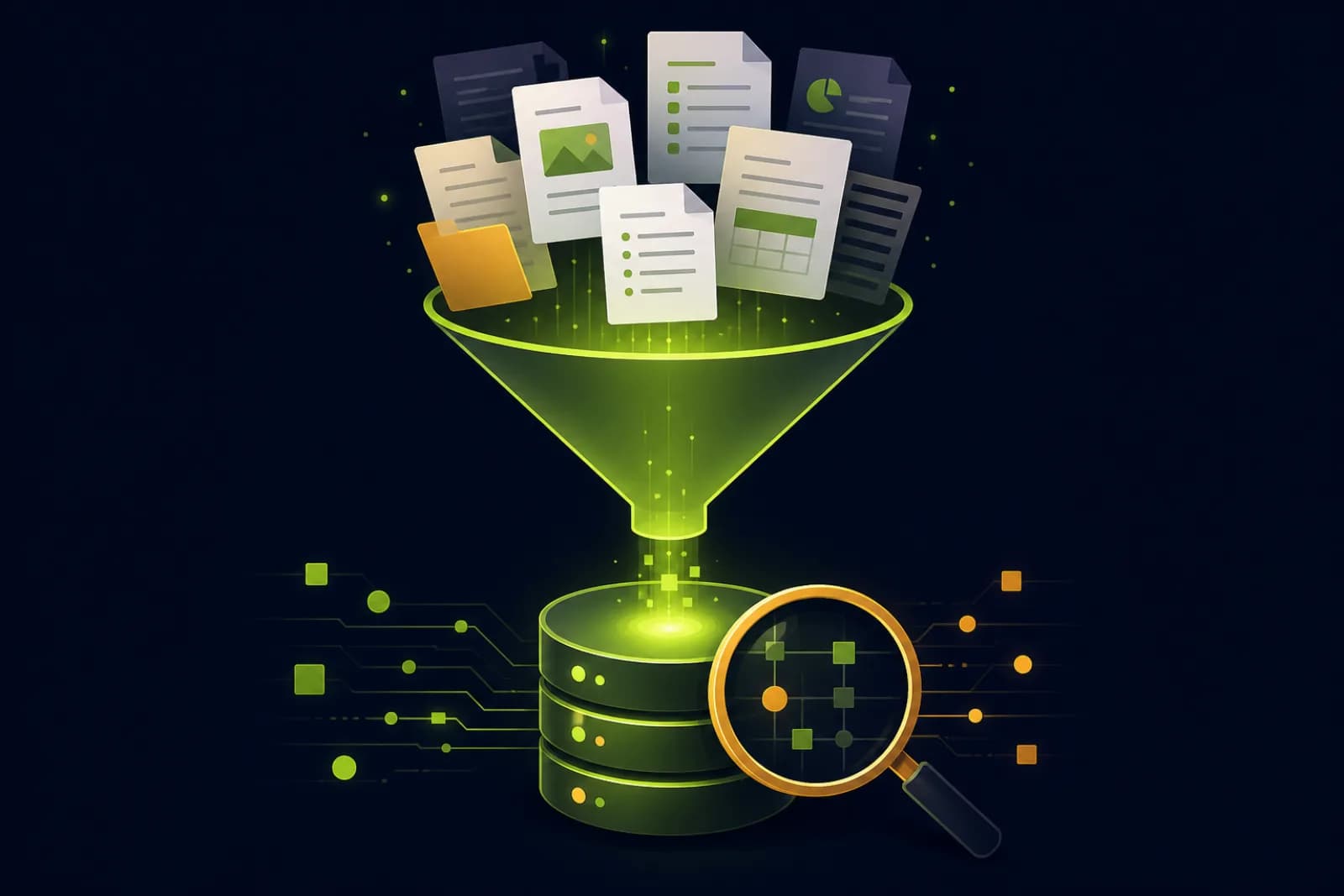
The technical backbone is retrieval-augmented generation (RAG). Instead of letting a language model guess, the agent retrieves the relevant passages from your own documents first, then composes an answer from what it found. According to a 2026 analysis cited by Vantaige, this approach reduces the factual error rate of a standard LLM from roughly 40–60 percent down to under 10 percent on enterprise document tasks — the difference between a toy and a tool your team can trust.
At Amitra Labs we treat Hermes as infrastructure, not a demo. The goal is an assistant your team can rely on for first-pass replies, internal Q&A, and repeatable workflows — with humans still owning exceptions, pricing decisions, and anything that touches money or legal commitments.
Why companies are deploying agents in 2026
The questions that eat your team's week are repetitive: where is the refund policy, what does the SLA say, how do we onboard a new vendor, what did we quote a similar client last year. The answers exist — somewhere in a Drive folder, a WhatsApp thread, or a spreadsheet nobody has opened in eight months. An agent that reads those sources before answering turns institutional memory into something queryable.
The economics have also shifted. API costs for a 50-person team asking around 200 questions a day typically fall under $200 per month in model usage, according to 2026 build guides — less than one hour of a senior employee's loaded cost per week. The expensive part is no longer the AI; it is the unglamorous work of cleaning and structuring the knowledge underneath it.
Finally, customers now expect instant, accurate replies on WhatsApp and email. A well-guardrailed agent drafts those replies in seconds, in your voice, with citations back to your own policies — and escalates to a human the moment a question leaves the safe zone.
What a production setup includes
- Deployment and environment hardening — access control, secrets management, logging, and a private instance your company owns.
- Knowledge base build — product docs, FAQs, pricing rules, policies, and playbooks cleaned, structured, and indexed for retrieval.
- Tool wiring — email drafting, calendars, CRM or spreadsheet lookups, and internal APIs where they genuinely help.
- Brand voice and refusal rules — explicit instructions for tone, what the agent must never invent (prices, SLAs, commitments), and when it must escalate.
- Evaluation and smoke checks — a fixed set of real questions with known-good answers, re-run every time the knowledge changes.
- Runbook and handoff — how to update knowledge, review logs, and handle edge cases, so the system stays accurate after launch.
- Optional automation bridges — n8n workflows for ticket creation, follow-up sequences, and alert routing.
The knowledge base is the real project
Every honest practitioner report from 2026 lands on the same point: the long pole of an agent rollout is not the model or the hosting, it is the documents. Expect the audit, cleaning, and structuring of internal documents to consume 20–30 percent of the budget. Outdated price lists, contradictory policies, and tribal knowledge trapped in chat threads all have to be resolved before an agent can answer safely.
The retrieval design matters just as much. The industry standard in 2026 is hybrid search — combining vector similarity with BM25 keyword matching — because pure semantic search misses exact product codes and policy numbers, while pure keyword search misses paraphrases. Citations come free with this design: every answer links back to the passage it was grounded in, which is what makes staff actually trust it.
A practical tip from our own deployments: write the knowledge base as if it were a public document. If a sentence would embarrass you in front of a client, it will eventually leak into a reply. This is also why our studio knowledge files include explicit honesty rules — never invent pricing, never invent client names, admit unknowns and escalate.
Cost bands (India & global, 2026)
| Setup tier | What you get | Typical budget | Timeline |
|---|---|---|---|
| Pilot agent | One knowledge pack, email/chat surface, brand rules, eval set | ₹4–12L ($5K–$15K) | 3–6 weeks |
| Production assistant | Multiple sources, hybrid search, tool wiring, CRM/WhatsApp surface, logging | ₹12–35L ($15K–$40K) | 6–12 weeks |
| Ops agent with automation | Above + n8n bridges, ticket flows, multi-team rollout | ₹35L–1Cr ($40K–$120K) | 3–6 months |
| Enterprise platform | SSO/RBAC, compliance logging, self-hosted models, audit trails | ₹1Cr+ ($120K+) | 4–9 months |
Monthly running costs, honestly
Ongoing spend has three parts. Model API usage is the smallest for most teams: roughly $1–20 per million output tokens depending on the model, which lands under $200 per month for a typical 50-person company. Vector database hosting runs from free (self-hosted Weaviate or Qdrant on a small VPS) to $70–700 per month for managed services at scale. Orchestration and hosting add another $20–100 per month self-hosted.
The line that actually dominates is human oversight. Guides from 2026 consistently flag QA, knowledge refreshes, and exception review as the largest ongoing cost — typically a few hours a week for a small company. Stale FAQs are the fastest way to break trust in the system, so budget the refresh ritual, not just the cloud bill.
Total realistic monthly run-rate for an Indian SMB: ₹8,000–40,000 all-in, depending on query volume and how much maintenance you keep in-house.
Deploy where people already work
The single biggest adoption failure is putting the agent in a separate portal nobody visits. Practitioner data from 2026 is blunt: users abandon bots that live outside their daily tools. For Indian SMBs that means WhatsApp and email first, then Slack or Microsoft Teams for internal use, then a web widget only if customers genuinely need it.
A sensible rollout sequence: start with an internal draft-only mode where the agent suggests replies that humans send, measure acceptance rate for two to four weeks, then allow direct sending for a narrow set of low-risk question types. Expand scope only as the evaluation set stays green.
The evaluation harness: how you know it works
The difference between an agent demo and an agent deployment is measurement. Before launch, we build an evaluation set: 50–100 real questions the business actually receives, each with a known-good answer and a list of things the agent must never do (invent a price, promise a deadline, disparage a competitor, improvise policy). The agent runs against this set before every knowledge update, and the score — grounded answers, correct citations, clean refusals — is the release gate.
In production, the harness becomes a sampling ritual: a human reviews a random slice of conversations weekly, flags failures by type (retrieval miss, tone slip, overreach), and the fixes feed back into the knowledge base or the rules. Teams that skip this loop discover failures from customers; teams that run it catch them in review.
This is also the honest answer to “can we trust it?”: trust is not a property of the model, it is a property of the process around it — grounded answers, explicit refusal rules, measured acceptance rates, and humans owning the exceptions.
Signals your company is ready for an agent
- The same 10–20 questions arrive every week across email and WhatsApp.
- Answers exist but are scattered across docs, sheets, and people's heads.
- New team members take weeks to become useful because knowledge is tribal.
- First-response time to customers is measured in hours, not minutes.
- You can name the low-risk question types an agent could safely own first.
- Someone on your side can own knowledge upkeep for 2–3 hours a month.
How Amitra Labs runs Hermes setups
We run a Hermes-style agent in-house for our own studio knowledge — services, case studies, response norms, brand voice, and escalation rules — so the pattern we deploy for clients is one we depend on ourselves daily. Our engagements follow the same Discover → Scope → Ship path as our software work: map the questions your team actually gets, build the knowledge pack, wire the tools, tune the voice, and ship with a runbook and an evaluation harness.
Related work shows the same philosophy in adjacent products: PerCoder ships real placement-prep workflows for colleges, and RepliView applies AI-assisted review flows to real user content. See our services page for Hermes Agent setup alongside n8n and OpenClaw automation, or start a conversation on the contact page — we will ask about your tools, channels, and the questions eating your team's time before quoting anything.
Hermes Agent FAQ
- Is Hermes Agent the same as a website chatbot?
- No. Chat widgets usually search a static FAQ. A Hermes Agent setup delivers a deployable agent with a grounded knowledge base, tool access, and brand rules that can draft replies, answer internal questions, and trigger real workflows with human oversight.
- Do you expose a public demo agent?
- Client and studio agents are private by design — they contain company knowledge and tool access. We demonstrate capability through scoped pilots and documented setups rather than an open public instance.
- How long does a first setup take?
- A focused pilot with a clean knowledge pack ships in 3–6 weeks. Multi-tool integrations, WhatsApp/CRM surfaces, and automation bridges extend that to 2–3 months, mostly for testing, access approvals, and evaluation.
- What data do we need to start?
- Your existing FAQs, product or service docs, pricing rules, policies, and a sample of real customer questions. We audit and structure them as part of discovery — messy inputs are normal and expected.
- Can the agent answer customers directly?
- Yes, but we recommend starting in draft-only mode. Once the evaluation set shows high acceptance for low-risk question types, direct sending is enabled in stages with clear escalation to humans for anything involving pricing, complaints, or commitments.
- Who owns the system and the data?
- You do. The deployment, knowledge base, and conversation logs belong to your company. Self-hosted options keep documents entirely on your own infrastructure when compliance requires it.