Custom web app from scratch: the 2026 founder's guide
A scoped custom web app MVP takes 8–16 weeks and ₹3–50 lakh in India ($25–55K US-equivalent bands) in 2026, across five phases: discovery (1–4 weeks), design (2–6), build (6–20), QA (2–4), and launch (1–2). Founders underestimate timelines by 2–3x, scope creep is the #1 cost killer, and post-launch iteration adds 20–40% of the initial budget in the first six months. This is the complete playbook.

What “from scratch” actually commits you to
A custom web app is not a website with a login screen. It is a system with business rules, user roles, data models, integrations, and edge cases — booking platforms, dashboards, internal tools, marketplaces, SaaS products. The moment your idea requires logic that no template or plugin encodes, you are in custom territory, and the economics change completely: you are buying engineering, not pages.
The 2026 agency benchmarks are consistent: a simple single-flow tool ships in 4–10 weeks, a properly scoped MVP in 8–16 weeks, and complex, AI-heavy, or regulated products in 12–28 weeks. AgileSoft's analysis, cited in Refact's 2026 guide, found founders are off by a factor of two to three on timelines — the classic error is putting 12 weeks of work on a 4-week calendar.
This guide is the realistic version: the five phases, what each costs, where projects actually die, and the delivery model we use to keep them alive. For pricing context across website types, pair this with our India website cost guide.
Typical custom app delivery windows (2026)
Relative scale · weeks
- Simple tool / portal4–10 weeks
- Scoped MVP8–16 weeks
- Complex / AI-heavy12–28 weeks
- Post-launch iteration+20–40% of budget
The five phases and what they cost
| Phase | Duration | Share of budget | What you get |
|---|---|---|---|
| 1. Discovery & scope | 1–4 weeks | 8–12% | Validated feature list, architecture plan, milestones, success criteria |
| 2. UI/UX design | 2–6 weeks | 15–25% | User flows, design system, clickable prototype |
| 3. Core build | 6–20 weeks | 50–60% | Backend, APIs, database, frontend, integrations — in sprint demos |
| 4. QA & hardening | 2–4 weeks | 10–15% | Tested, stable product; security and performance checks |
| 5. Launch & handover | 1–2 weeks | 5–10% | Cloud setup, monitoring, CI/CD, runbook, training |
Phase 1: Discovery — the phase everyone rushes
Discovery is 8–12% of budget and determines the other 90%. The deliverables: a validated feature list (what v1 does and, critically, what it does not), user flows for the core journeys, an architecture decision (stack, data model, integrations), and a scope document with milestones and success criteria. Verlua's 2026 guide names the two biggest schedule killers, and both live here: unclear ownership — no single decision-maker on the client side — and integration discovery that happens during build instead of before it.
The tell that discovery was skipped: the phrase “we'll figure it out as we go” next to a fixed deadline. Every hour spent in discovery returns multiples in the build phase, because the expensive version of every decision is the one made mid-sprint with code already written against the wrong assumption.
At Amitra Labs this is the Discover step of our Discover → Scope → Ship model — a short, structured engagement that ends with a scope both sides can sign, before any build budget is committed.
Phases 2–3: Design and the build sprints
Design in a custom app is not decoration; it is the cheapest place to kill bad ideas. Two to six weeks produces user flows, a design system, and a clickable prototype that stakeholders can react to before engineering commits. A change at prototype stage costs an hour; the same change after three sprints of build costs days.
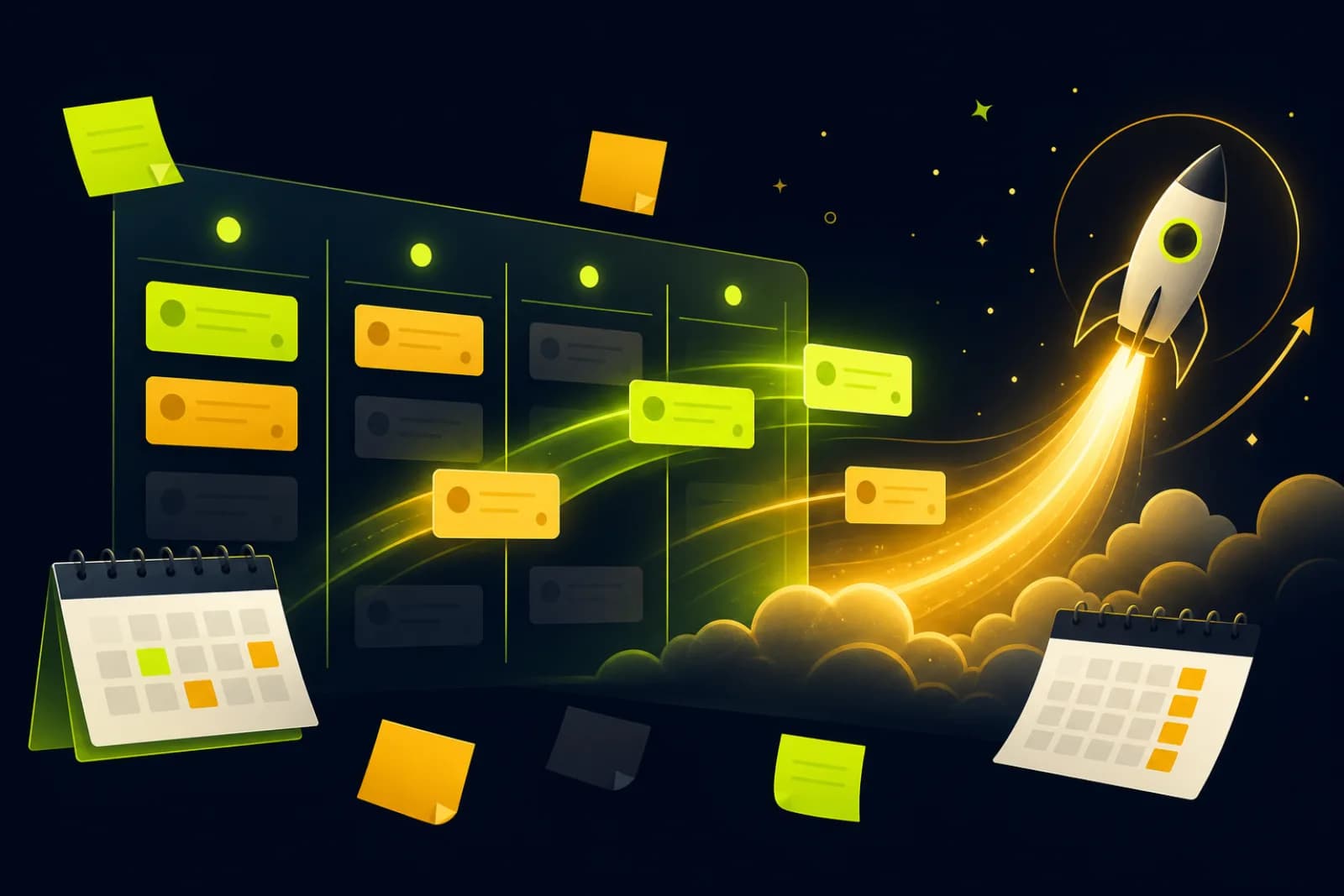
The build phase runs in two-week sprints with a demo at the end of each — working software you can click, not status reports. Backend (APIs, database, business logic), frontend (the interface your users touch), and integrations (payments, email, third-party APIs) proceed in parallel tracks. This is 50–60% of budget for a reason: it is where the product actually appears.
One 2026 shift worth noting: agencies using AI-assisted development tooling report compressing build timelines by 40–60% compared to traditional cycles, which flows directly into cost. The discipline underneath — scope, architecture, review — matters more, not less, when code gets written faster.
2026 budgets by build type
| Build type | Timeline | India budget | US-equivalent band |
|---|---|---|---|
| Simple tool / portal | 4–10 weeks | ₹3–12L | $15–40K |
| Scoped MVP (auth, payments, one core flow) | 8–16 weeks | ₹12–35L | $25–55K |
| Multi-role platform / marketplace | 12–20 weeks | ₹35L–1Cr | $55–150K |
| Complex / AI-heavy / regulated | 16–28 weeks | ₹1Cr+ | $150–300K+ |
| Post-launch iteration (first 6 months) | ongoing | +20–40% of build | +20–40% of build |
Scope creep: the #1 cost killer
SaaSLaunchLab's 2026 breakdown is direct: projects that drag past 20 weeks usually do so because of scope creep, and it is the number-one cost killer in MVP development. The mechanism is innocent — a stakeholder sees the sprint demo, has a genuinely good idea, and “while you're in there anyway” gets appended to the sprint. Ten of those and the MVP has quietly doubled.
The defense is structural, not willpower: a written scope with an explicit “not in v1” list, a change-request lane where good ideas get priced and scheduled instead of smuggled in, and a parking lot for v2. Founders are often surprised that the answer to a new idea mid-build is “yes, and here's what it costs and moves” — that is what a healthy engagement sounds like.
The companion killer is decision latency: a question that sits unanswered for a week stalls a sprint. Name one decision-maker with authority on the client side before the build starts. Verlua's data identifies unclear ownership as one of the two biggest schedule killers for exactly this reason.
Phases 4–5 and the post-launch reality
QA is not a formality: two to four weeks of functional testing, security checks, and performance budgets, overlapping the final build sprints. Launch is one to two weeks of cloud setup, monitoring, CI/CD, DNS, and the runbook your team will actually use at 2am. Then the product meets users, and the real learning begins.
Budget for what comes next, because every 2026 guide agrees on the number: post-launch iteration in the first six months typically requires another 20–40% of the initial build investment. Real users behave differently than discovery assumed — they ignore the feature you loved, break the flow you thought was obvious, and ask for the one thing nobody predicted. That is not failure; that is the plan working. The founders who get hurt are the ones who spent 100% of budget on v1.
Maintenance after that is steady-state: hosting and services, security updates, and a small monthly improvement cadence. Well-built custom apps are cheap to keep — this site's stack (Next.js, static-first) runs for near-zero hosting cost, and the same architecture discipline applies to client apps.
How to know you're ready to build
- You can describe the core user journey in two sentences without a whiteboard.
- You have talked to 5–10 real potential users, not just friends who said nice things.
- You know the three features v1 must have — and can accept that everything else waits.
- You have budget for the build plus 20–40% for the six months after it.
- You can name the single decision-maker on your side (probably you).
- You have chosen a partner who writes scopes, not just estimates.
Who builds it: freelancer, studio, or in-house
The build partner question changes the budget math as much as scope does. A strong freelancer is the cheapest credible path for a small, well-defined tool — India pricing runs 25–40% below studio bands — but you are buying one person's time, and the bus factor is one. For anything with payments, multi-role logic, or a deadline that matters, that risk needs a honest look.
A studio costs more and returns structure: discovery, a written scope, sprint demos, QA as a phase, and support after launch. The premium is essentially insurance against the two project killers — scope creep and decision latency — plus a team that survives someone getting sick. In-house hiring makes sense only when software is the business itself and you need permanent capacity; for a first product, hiring a team before knowing what to build reverses the sensible order.
The 2026 wrinkle: AI-assisted development has compressed build effort 40–60% at agencies that adopted it, per multiple 2026 guides — which means studio pricing for equivalent scope is lower than two years ago, and freelancer-plus-AI is a viable path for tighter budgets. What has not compressed is discovery, architecture judgment, and production ownership. Those remain the parts worth paying for, whoever you pay.
The first 30 days after you decide
Once you commit, the sequence that protects the budget: week one is discovery workshops — users, journeys, constraints, the “not in v1” list. Week two is the scope document — milestones, demo schedule, acceptance criteria, and the change-request process, signed by the single decision-maker. Weeks three and four are design — flows and a clickable prototype you test against real users before engineering commits a line of production code.
Notice what is absent from that month: coding. That is deliberate. The build that starts in week five with a validated prototype and a signed scope finishes faster than the one that started coding in week one and spent months discovering what it was actually building. Every 2026 timeline guide lands on this same point from a different angle — the calendar rewards preparation, and punishes improvisation at exactly the rate of 2–3x.
How we ship custom apps at Amitra Labs
Our SaaS and web app engagements follow Discover → Scope → Ship: a structured discovery that ends in a signed scope with milestones and success criteria; two-week build sprints with real demos; QA and launch as first-class phases; and support after launch, not just handover. ProAmi (operations SaaS) and PerCoder (placement-prep platform) are the pattern in production — real products with real users, built this way.
If you have an app idea and want the honest version of what it takes, the starting point is a short conversation: the core journey, the three must-have features, your timeline, and your budget band. Share them via the contact page and we will come back with the right first step — including when that step is “start smaller.” Explore our services for the full picture of what we build.
Custom web app FAQ
- How long does a custom web app MVP really take?
- 8–16 weeks for a properly scoped MVP in 2026 — 4–10 for a simple single-flow tool, 12–28 for complex or AI-heavy products. Founders routinely underestimate by 2–3x, mostly by compressing discovery and underestimating testing.
- What does an MVP cost in India in 2026?
- ₹12–35L for a scoped MVP with auth, payments, and one core flow; ₹3–12L for a simple tool; ₹35L–1Cr+ for multi-role platforms. Add 20–40% of the build budget for the first six months of post-launch iteration.
- Should I build an MVP or the full product?
- MVP, almost always. The purpose of v1 is to learn from real users with the least risk. Products that skip the MVP phase pay for the same learning with a much larger bill and a public failure.
- What kills most custom app projects?
- Scope creep (good ideas smuggled into sprints without pricing) and decision latency (questions sitting unanswered). Both are solved structurally: a written scope with a “not in v1” list, a change-request lane, and one named decision-maker.
- Can AI tools just build my app in 2026?
- AI-assisted development compresses build timelines 40–60% in agency workflows, and we use it ourselves. But discovery, architecture, scope discipline, QA, and production ownership are exactly the parts AI does not remove — they are where projects succeed or fail.
- What happens after launch?
- The first six months are iteration: real users reveal what discovery missed, and 20–40% of the initial budget typically goes into responding. After that, steady-state maintenance — hosting, security updates, and a monthly improvement cadence — keeps the product healthy.